Why does good interior design take time?
A tailored render is not a generic picture of a beautiful room. It is the visual result of many project-specific decisions made beforehand.
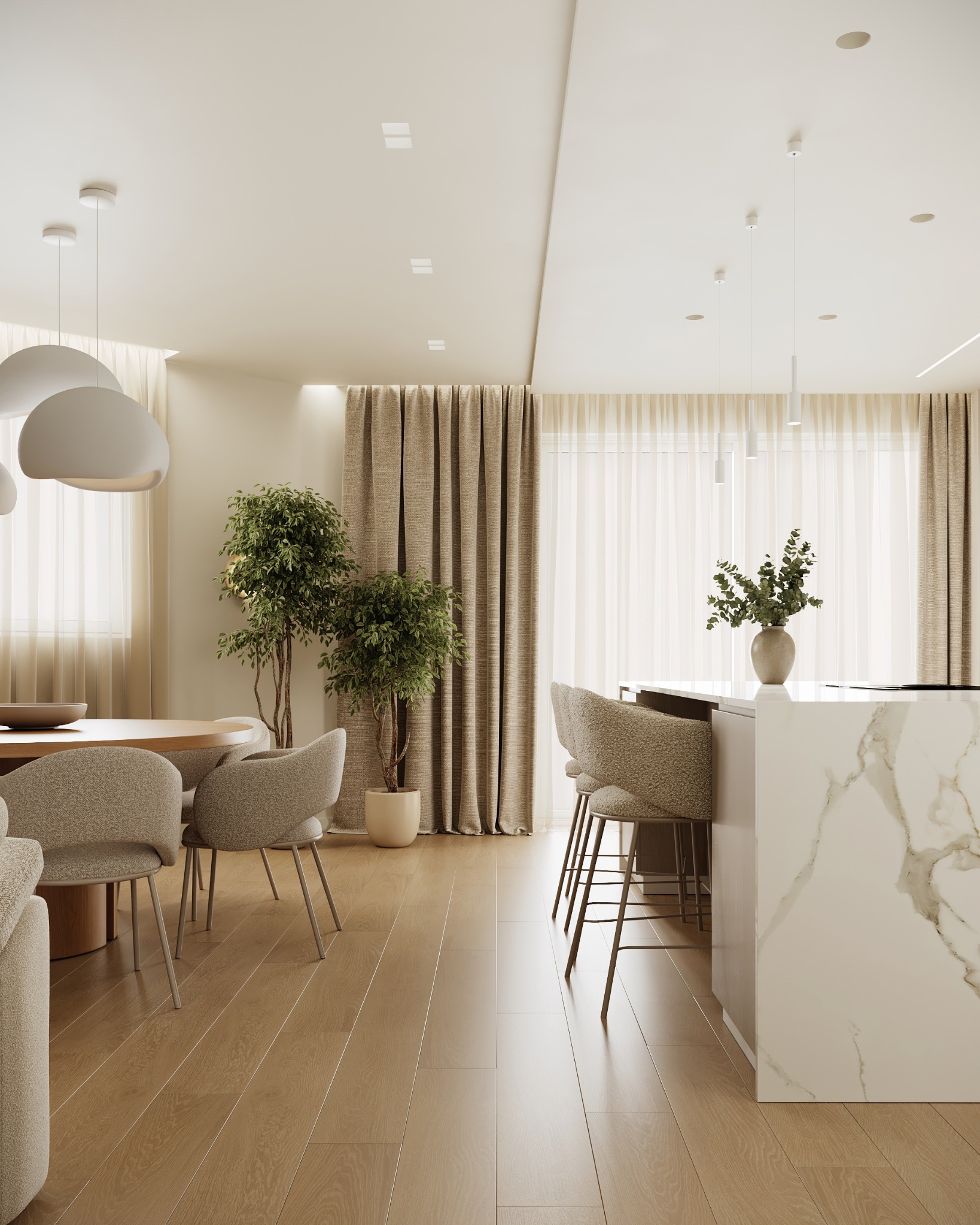
Good design takes time because the aim is not simply to produce an attractive image. The aim is to create a space that fits the room, reflects the client and can be understood well enough to implement.
The room comes before the render
Before visualisation begins, the measured plan must be studied and the layout resolved. Circulation, furniture proportions, storage, doors and the relationship between different areas all influence what can work realistically.
A render created before these decisions may look convincing, but it will not necessarily describe a workable room.
Every visible detail is a decision
A customised 3D render brings together the specific materials, colours, joinery, furniture, lighting points and ceiling details selected for that particular space. Each choice affects the others: a darker finish changes how light is perceived, while a joinery detail may alter proportions or the position of a fitting.
Design develops in stages
We begin with the initial stage: furniture layout, electrical and lighting plans, soffit planning and the dedicated lighting circuit. Clients may request this stage on its own and stop there.
For a full design service, the approved technical foundation is then developed through elevations and mood boards before the photorealistic 3D renders and final specification are prepared.
Reviewing prevents guesswork
Structured reviews allow important decisions to be checked in the correct order. This avoids repeatedly changing a finished render because an earlier layout, material or lighting decision was never properly resolved.
The process may take longer than producing a generic visual, but the result is far more personal, coherent and useful.